
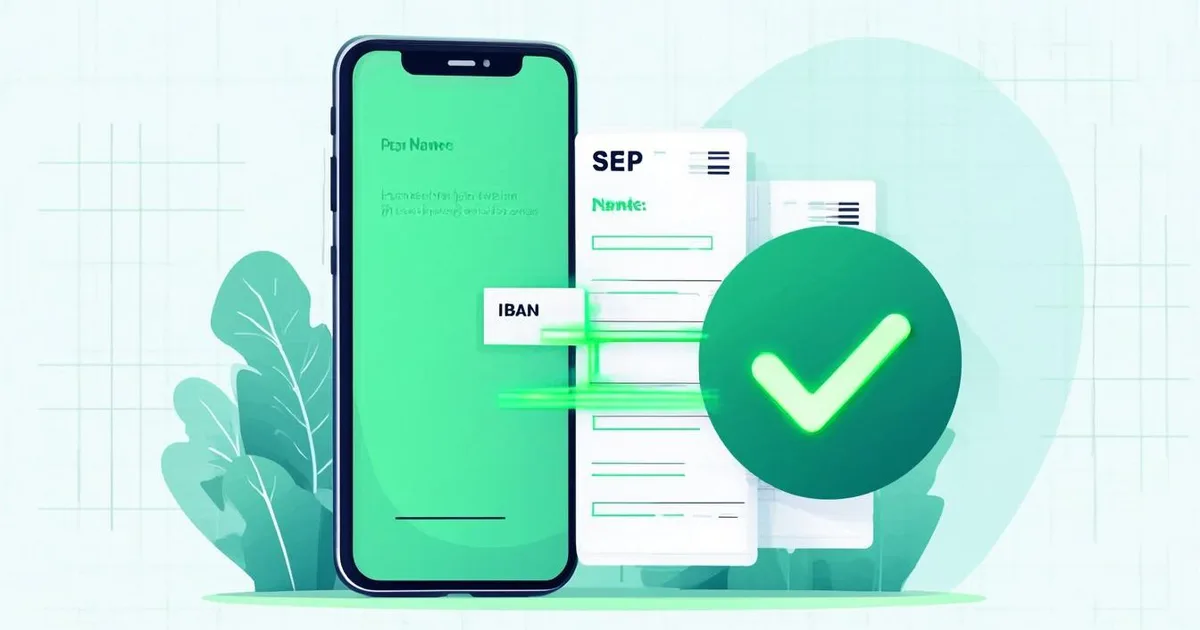
A CoP match means the payee name you entered matches the name held on the destination account. In plain terms: the bank on the other side has confirmed that the account you are about to pay belongs to the person or business you named. It is the green light of a Confirmation of Payee (CoP) check - the UK's account name-checking service - and it is the result you want on almost every payment.
But 'match' is one of three graded answers, not a yes/no. Understanding the difference between a match, a close match and a no match is what turns a name check from a vague reassurance into a decision you can act on.
What a CoP match actually confirms
A match confirms one specific thing: the name you supplied is consistent with the account holder's name on the destination account. That is genuinely valuable. It catches the two most common ways money goes astray - a mistyped or out-of-date account number, and an invoice or email that quietly swapped the bank details for a fraudster's account.
Match confirms the name, not the intent
A match tells you the account belongs to the party you named. It does not tell you that the party is honest, that the invoice is genuine, or that the person instructing you is who they claim to be. Treat it as one strong signal, not a full clearance.
The three CoP results, and what to do with each
- Match - the name matches the account holder. Proceed with normal confidence.
- Close match - the name is similar but not identical (a missing middle name, a trading name versus a registered name, initials instead of a full first name). The check usually returns the name held on the account so you can confirm or correct it.
- No match - the name does not belong to that account. This is the classic red flag for a misdirected payment or an authorised push payment (APP) scam. Stop and re-check the details through a channel you trust.
The middle result is where most confusion lives. A close match is not a failure and it is not fraud - it is the scheme telling you that the names are close enough to be worth a second look. Confirming the suggested name, rather than abandoning the payment, is usually the right move.
Why a match is not a guarantee
It is tempting to read a match as 'this payment is safe'. It is not that either. Name checking verifies that the account belongs to the party you named - it cannot verify that the party is who they say they are, or that the reason for the payment is legitimate. A fraudster who has taken over a genuine supplier's email account can still direct you to a genuine account that matches a genuine name. The check removes the account-detail risk; it does not remove the social-engineering risk.
CoP match vs VoP match: the same idea, different schemes
Confirmation of Payee is the UK scheme, built around UK sort codes and account numbers. The European equivalent is Verification of Payee (VoP), built around IBANs and coordinated by the European Payments Council for SEPA. VoP returns the same graded logic - match, close match, no match - plus a fourth outcome, 'not available', for when the payee's bank cannot answer at that moment.
The practical difference for anyone operating in both regions is coverage, not concept. A provider connected to one scheme is not automatically connected to the other, so firms that pay into the UK and the euro area need both. VoP is mandated by the EU Instant Payments Regulation: euro-area PSPs have had to offer it since 9 October 2025, and PSPs in non-euro Member States follow by 9 July 2027.
How to get more matches
- 1 Send the most official name you hold - the registered or legal name, not a nickname or a shortened trading name.
- 2 For businesses, include an organisation identifier such as a VAT number where the scheme allows it, so the check is not name-only.
- 3 Capture the verified name returned on a close match and reuse it, so repeat payments match cleanly next time.
- 4 Re-verify when bank details change, not on every payment to a saved payee.
RoxPay delivers Verification of Payee on the SEPA scheme through one REST API and a dashboard, returning the standardised outcomes - match, close match, no match and not available - in well under a second, with the verified name on a close match so payers can confirm rather than guess.